

Škoda Group presents next-generation trolleybuses in Tallinn
April 17, 2026
Plzeň, April 17, 2026 – Škoda Group has officially introduced its latest generation of battery-powered trolleybuses in Tallinn (Estonia), marking an important milestone in the evolution of modern electric public transport. The presentation event, held on April 8, included a first test drive of the new vehicle, offering stakeholders and media a direct experience of their performance and comfort.
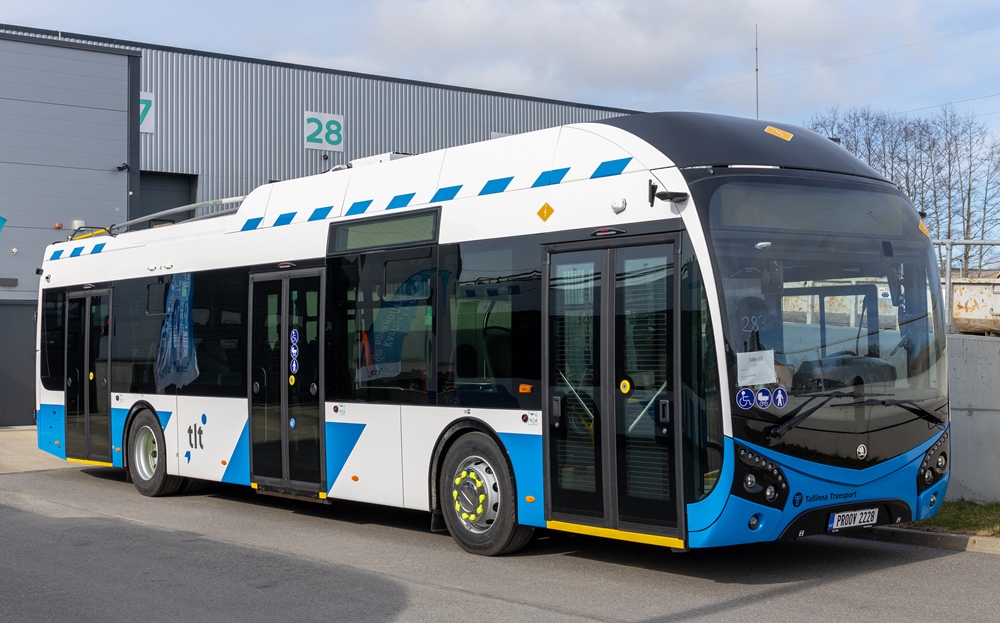
As part of the project, Škoda Group will deliver 40 new battery trolleybuses to Tallinn this year – 22 eighteen-metre Škoda 33Tr trolleybuses and 18 twelve-metre Škoda 32Tr trolleybuses. The vehicles represent a new generation of electric mobility solutions, designed to combine the advantages of conventional trolleybus systems with the operational flexibility of battery-electric buses. With the ability to operate up to 25 kilometres independently of overhead lines, the trolleybuses provide cities with greater freedom in route planning and day-to-day operations. The contract value, which includes comprehensive service and maintenance and the option to deliver 30 more trolleybuses exceeds EUR 50 million (together with options).
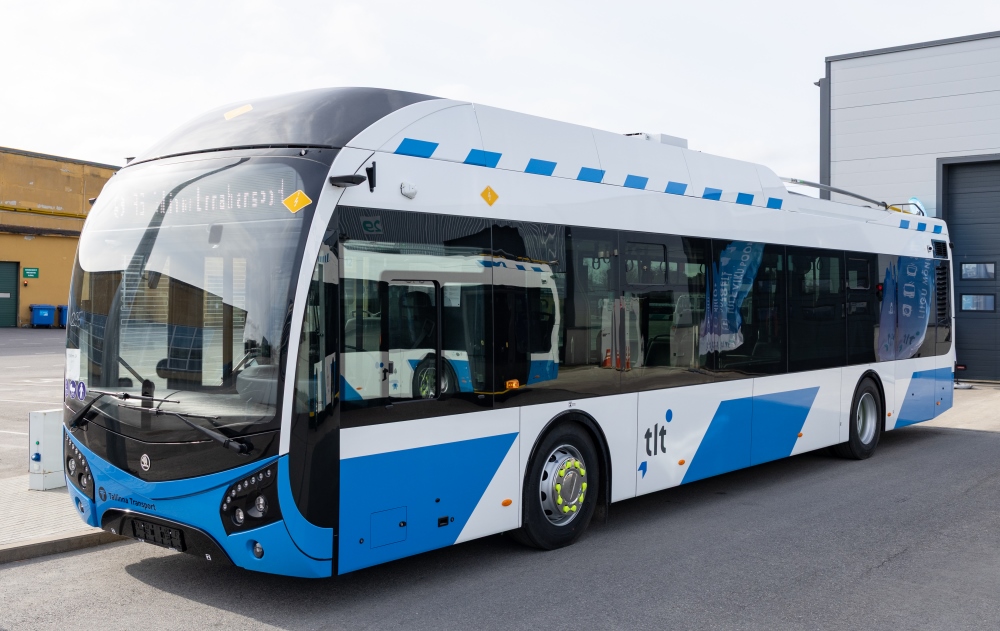
“Our latest trolleybuses are designed to meet the evolving needs of modern cities,” said Petr Kasenčák, Head of Sales Bus Mobility at Škoda Group. “They bring together reliability, efficiency and flexibility in a single solution. Thanks to onboard batteries, operators can maintain continuous service even in sections without overhead infrastructure, which is increasingly important in dense or historically sensitive urban areas.”
The Škoda trolleybuses enable cities to reduce dependence on overhead wiring, particularly in central districts where visual impact and spatial constraints are key considerations. At the same time, they retain the core strengths of trolleybus systems, including high energy efficiency and stable power supply where infrastructure is in place.
The Tallinn project also demonstrates the importance of integrating advanced vehicles with upgraded infrastructure. The modernisation of the contact network ensures full compatibility with the new fleet and supports reliable long-term operation. This system-level approach reflects Škoda Group’s expertise not only as a vehicle manufacturer but as a provider of comprehensive electric mobility solutions.
The vehicles will provide passengers with high comfort; they will feature air conditioning, a fully low-floor design, and modern information systems, including Wi-Fi connectivity. To facilitate easier and quicker boarding, they will feature sliding doors and an electric ramp for the boarding of individuals in wheelchairs and with strollers. The articulated trolleybuses Škoda 33Tr will have two driven axles, allowing for better traction in winter conditions and improving the vehicle’s manoeuvrability. Propulsion will be driven by modern and economical electrical equipment based on IGBT elements, complete with diagnostics and remote access to vehicle systems.
“Passenger comfort and environmental performance are central to the new trolleybus design. The vehicles offer a quiet and smooth ride, while zero local emissions contribute to improved air quality and reduced urban noise levels. In Tallinn, we are not just delivering vehicles—we are contributing to a fully integrated and future-ready transport system,” added Kasenčák.
With this deployment, Škoda Group continues to strengthen its position as a leading supplier of electric public transport solutions in Europe. The Tallinn project highlights how next-generation trolleybuses can play a key role in building efficient, adaptable and sustainable urban mobility systems, supporting cities in their transition towards cleaner transport without compromising reliability or service quality.
Source: Škoda Group
